


Takeout pizza can be pretty good, especially when cooked in a searingly hot, wood-fired oven. But there’s something truly satisfying about making it yourself, and it’s easier than you might think. Here’s our guide to creating pizza perfection, with tips and tricks for the best dough, the all-important crisp base, and a huge choice of sauces and toppings. There are speedy pizzas, some that take a little more time, gluten-free and vegan options, yeast-free pizzas, and new twists on favorites.
The best flour to use
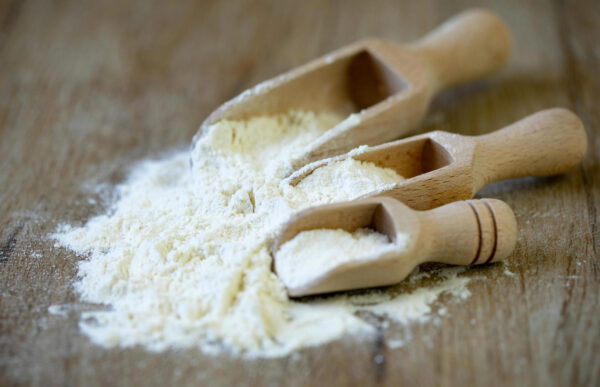
Strong Italian 00 flour, or pizza flour, is the best flour to give a crisp, light crust with lots of big, airy pockets. It’s very finely ground and the Italians love it for pasta-making too. It’s reasonably easy to find but failing that, use a strong bread flour instead or a 50-50 mixture of strong flour and all-purpose flour. The result won’t be exactly the same, but you’ll still have a tasty pizza.
Making dough
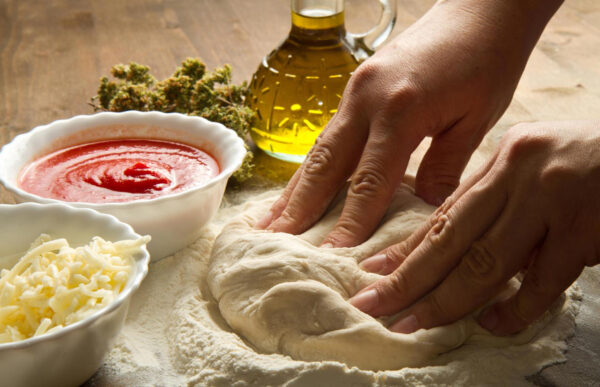
Pizza dough consists of just four ingredients – flour, yeast, water and salt. It’s by working and kneading the dough that the gluten protein in the flour expands and stretches, which will cause the dough to rise. You can knead by hand or in a stand mixer with the dough hook attachment. It usually takes around 10 minutes. Check it’s kneaded sufficiently by pressing the dough with your finger – it should bounce back.
Allow the dough to rise
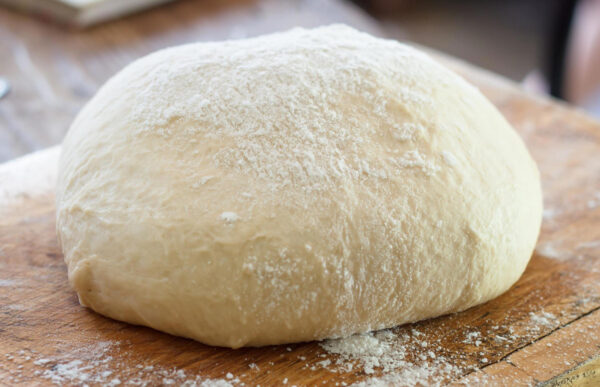
Leaving enough time for the dough to rise will give it a better structure and improve the flavor. Recipes will vary, but as a rough guide, allow four hours for it to rise, covered with a damp cloth or oiled plastic wrap. You can also leave it for 24 hours in the refrigerator for a slow rise which will add even more flavor. Follow our recipe for perfect pizza dough. It calls for fresh yeast but just halve the quantity if using active dry yeast.
Rolling out the dough
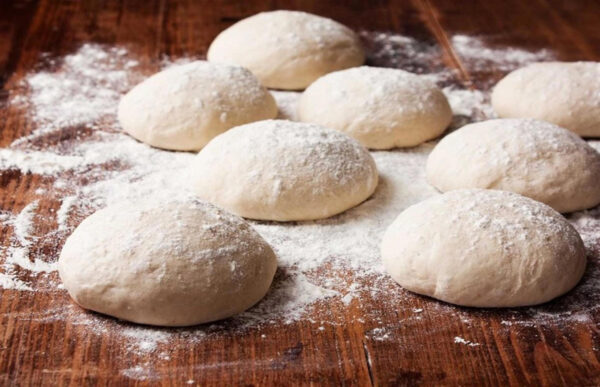
Once the dough is ready to shape into pizzas, it will be stretchy and pliable, so you can pull it into shape with your hands. Otherwise, use a rolling pin to start with. It should be uniform in thickness all over, and it’s easy to coax it into being even by simply pulling the dough.
Sauce: fresh tomatoes
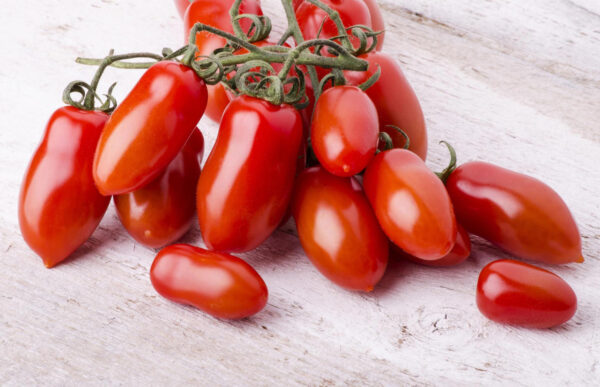
A fresh tomato sauce for pizza needs a specific type of cooking tomato, namely San Marzano. They have thick skins and flesh, and contain much less water than salad tomatoes. Plus they’re sweet and low in acidity, with few seeds. Skin the tomatoes before roughly chopping and cooking with a little garlic and seasoning until thickened.
Sauce: tinned tomatoes
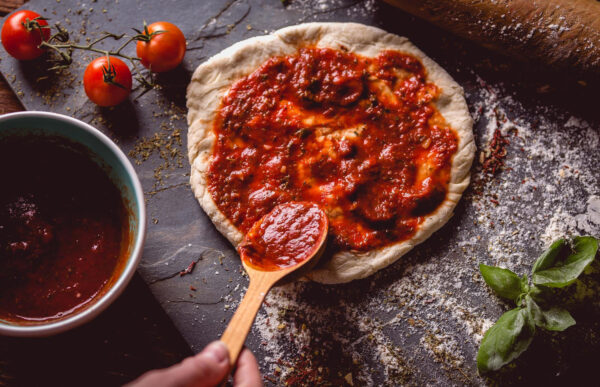
There’s nothing wrong at all with using tinned tomatoes for the sauce. However, buy Italian plum tomatoes, preferably San Marzano. Although they will cost a little more, cheaper brands tend to be too watery and not as sweet. Take the tomatoes out of their juice and mash them with your hands or a potato masher to keep the texture, and add a little sea salt and black pepper. A simple yet tasty sauce.
Sauce: passata
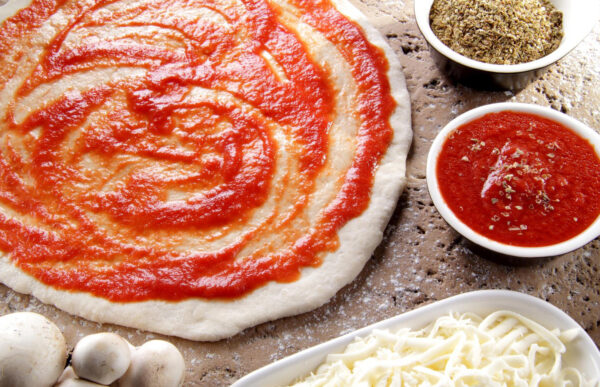
For a speedy, easy sauce, try using passata – tomato sauce which has been strained of its skin and seeds. Good Italian brands will be thicker and sweeter so buy the best quality you can. Add a little sea salt and perhaps a pinch of dried oregano, depending on your recipe. Ladle a little into the center of the dough, then use the base of the ladle to spread it evenly and thinly all over the surface.
Cheese: block mozzarella
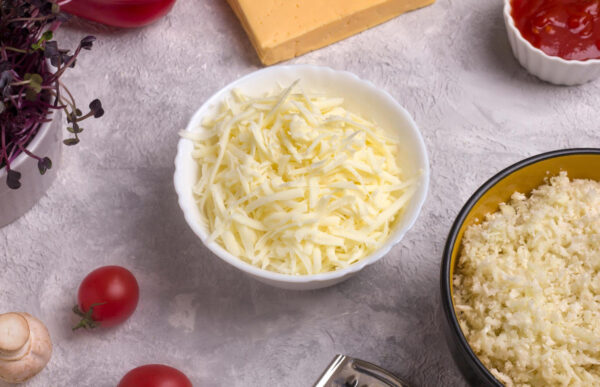
Mass-produced block mozzarella is used for commercial pizzas, as well as for home-cooked. It’s quite solid, easy to grate, melts very well without burning and becomes quite stretchy. It’s rather bland, so add some freshly-grated Parmesan on top of the tomato sauce before scattering the grated mozzarella over.
Cheese: buffalo mozzarella
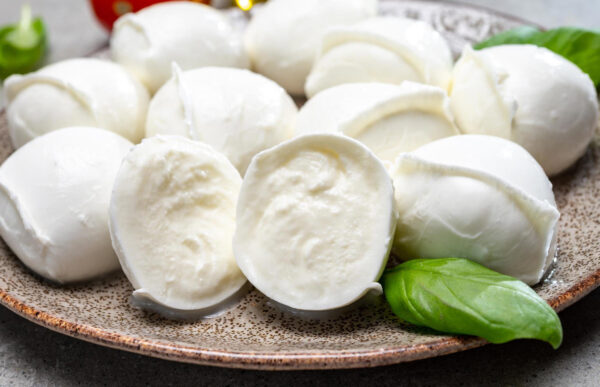
For an authentic Italian pizza, buffalo mozzarella is the cheese of choice. And when making a classic margherita, Parmesan is also used, to add a salty, more savory flavor to the relatively neutral mozzarella. Other good melting cheeses are provolone, fontina, and Cheddar, which can be combined with buffalo mozzarella. Ensure to drain fresh mozzarella well before using it on pizza.
Liking this? Bookmark this website and subscribe to our newsletter for more updates.
How to achieve the crispy base
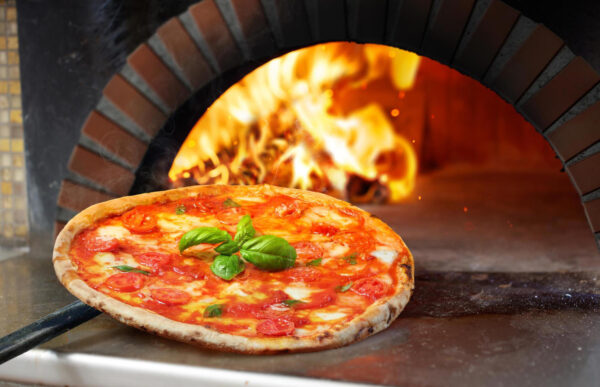
Most of us don’t have the luxury of a pizza oven at home, so what’s the best way to get that crisp base? The oven needs to be at its hottest and use a pre-heated baking stone, metal pizza dish, baking tray, or cast iron pan. This almost replicates a pizza oven, ensuring the base sears quickly and is evenly crisp. Alternatively, start the pizza in a very hot cast iron pan on the hob, then pop it under the grill to brown the top.
Getting pizza into a hot oven
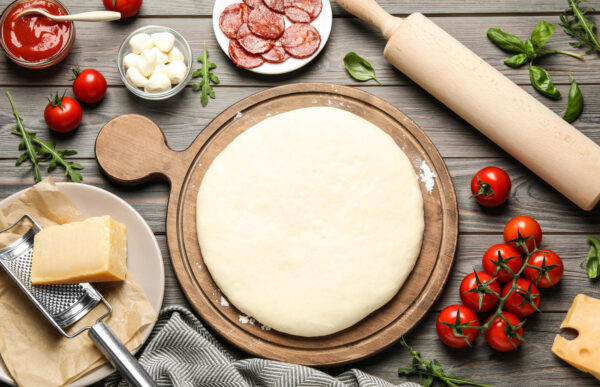
The question is – how do you get the assembled pizza on to a hot baking stone or metal pizza dish? Use a pizza paddle or a rimless baking sheet, well dusted with semolina or flour. Then it simply slides off into the oven without sticking.
Invest in a pizza cutter
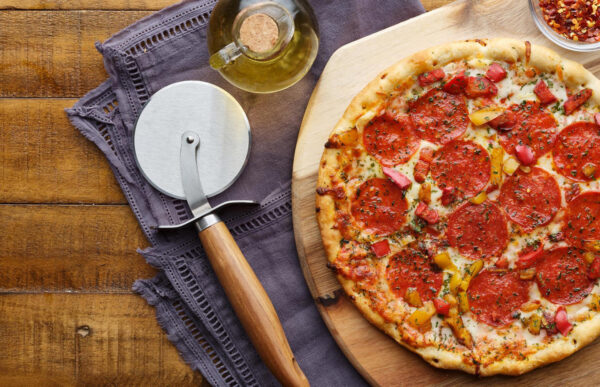
They’re not expensive and cut pizza perfectly, so it’s worth buying a pizza cutter. They also make easy work of cutting pastry, especially difficult-to-handle filo and puff pastry.
Make your own chili oil
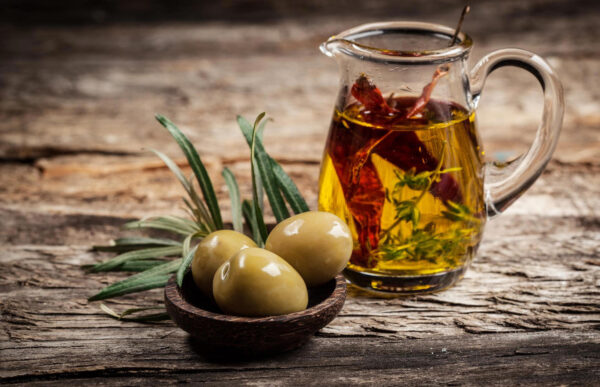
A drizzle of chili oil really peps up a pizza. It’s very easy to make and is so versatile. It also adds punch to a simple pasta dish, livens up a stir-fry, and gives extra zing to a cheese toastie.
Roman pizza
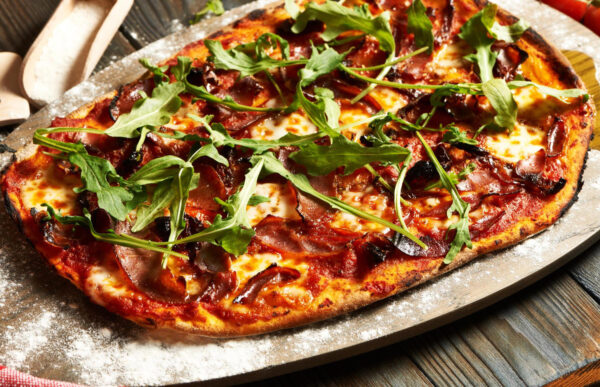
In Naples, home of pizza, pizza dough, by law, can only be made with flour, salt, yeast and water. In Rome, cooks add olive oil to the dough, which makes it more pliable and makes it easier to roll out more thinly. So typically Roman pizza is much thinner and more crispy than its Neapolitan cousin, often sold in rectangular slices in takeout joints.
Calzone
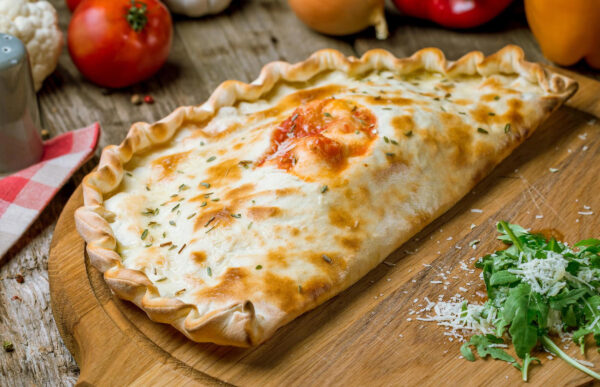
Translated as ‘trouser leg’, calzone was invented in Naples as an easy on-the-go food. It’s basically a pizza which is folded in half before baking, often stuffed with mozzarella, salami, and ricotta. Our recipe is for mini calzones, which make a great party snack, stuffed with Parmesan and vegetables. The quantity would make two to three larger-sized calzones.
Stromboli
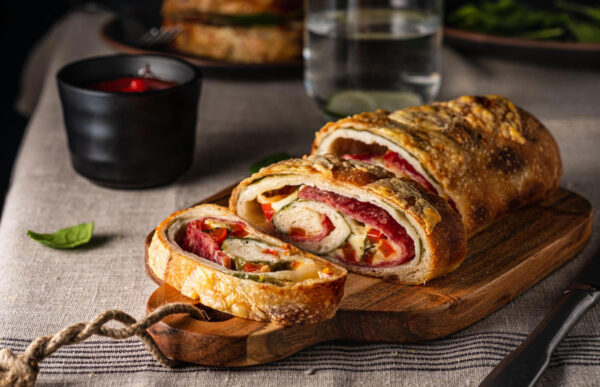
Whereas calzone is definitely Italian, stromboli was invented in Philadelphia in the 1950s. It’s like a stuffed pizza, where a rectangle of dough is topped with tomatoes, ham, and cheese, leaving a narrow strip around the edges. The edges are glazed to make it stick and it’s rolled up into a sausage shape before baking, then cut into slices. It makes great sharing food and you can vary the fillings according to preference, but there must be cheese.
Pizza bianca
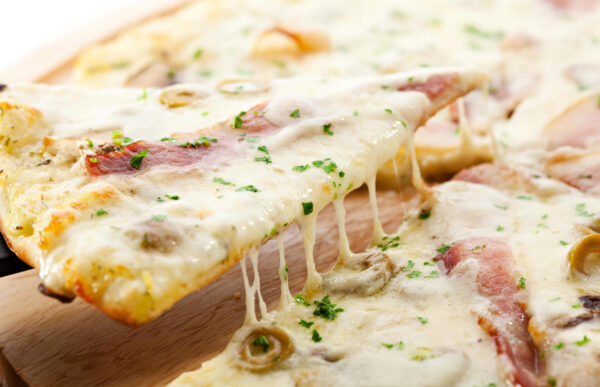
This is white, as opposed to red, pizza, with no tomato sauce. It’s a wonderfully cheesy option – the base is usually covered in ricotta, mozzarella, and Parmesan. Crème fraîche can be used in place of the ricotta, and it could also topped with ham or salami, green olives, artichoke hearts, or anchovies.
Yeast-free instant pizza
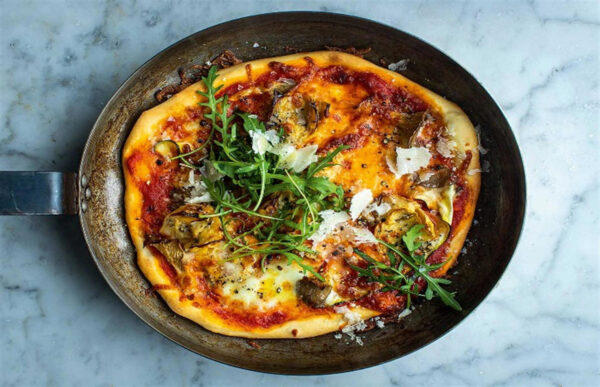
With a simple dough made with flour, yogurt, water, and baking powder, there’s no resting or rising involved in this pizza, and it’s topped with melting mozzarella, zucchini, artichokes, and mushrooms. Start cooking it in an ovenproof frying pan before finishing off in the oven. This ensures the base is crisp.
Speedy shortcut pizza
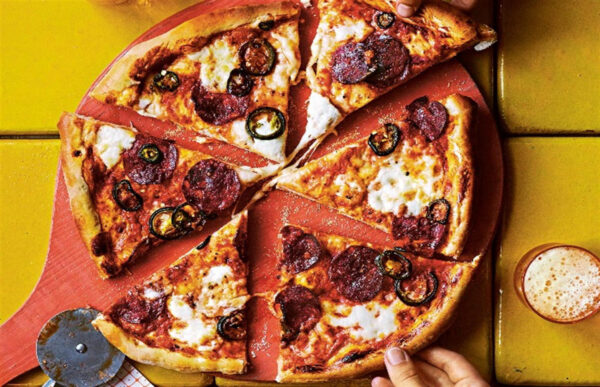
By using fast-acting, easy-blend dried yeast, you can rustle up this pizza in under an hour, with only a 10-minute rise. It will be even quicker if you use a stand mixer with a hook attachment to knead the dough. The topping calls for passata, mozzarella, and garlic, but experiment with adding whatever ingredients you fancy, like pepperoni, sliced black olives, and grated Parmesan.
Pide
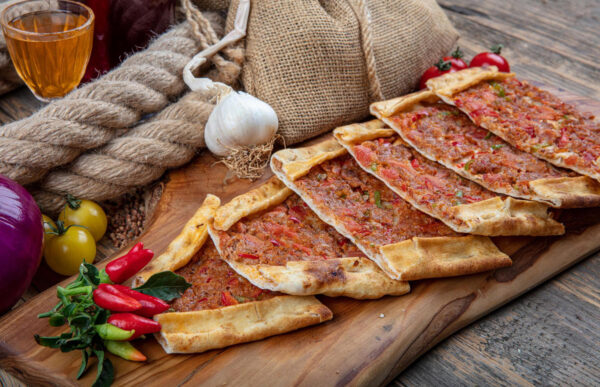
Popular in North Africa and Turkey, these spicy lamb pizzas called pide are often sold as street food. The dough is similar to pizza dough, although it contains oil so the base can be rolled very thinly. The ground lamb is flavored with chili, tomato, garlic, and dried mint, which is much more intense than fresh. Traditionally, there’s no cheese but it’s tasty with some feta crumbled over.
Coca
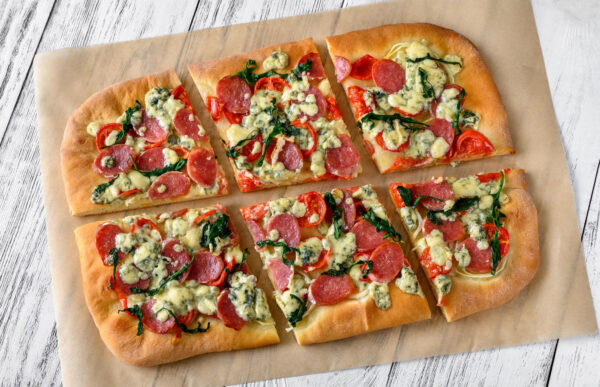
In northern Spain, these pizzas are known as coca. Rectangular in shape, they are topped with tomato, a local creamy blue cheese, garlic, smoked paprika, and a local sausage similar to salami or chorizo. It’s a very good combination for any pizza.
Vegan pizza
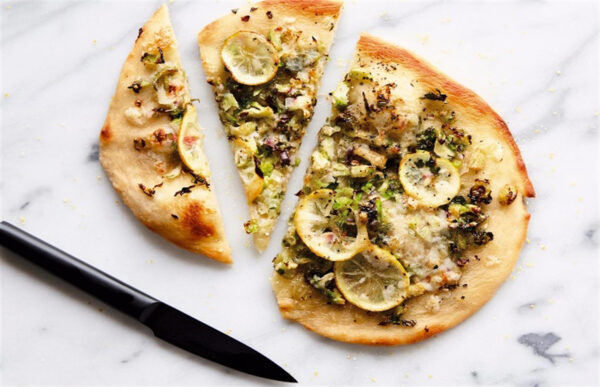
Pizza is pretty tough on vegans, without that lovely bubbling cheese. But this recipe uses vegan mozzarella, which is not a bad substitute, plus shredded shallots, Brussels sprouts, and slices of roasted lemon which have a very intense citrus flavor.
Gluten-free pizza
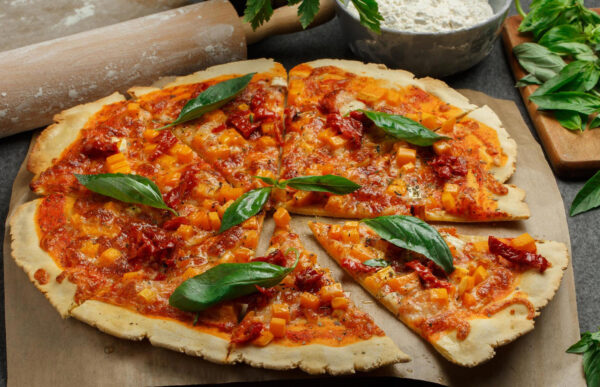
Although you won’t achieve the same light, crisp, and airy result with a gluten-free base, it still works pretty well. Ready-made gluten-free bases are widely available in stores now – some made with gluten-free flour, some based on puréed cauliflower. Or try our recipe for gluten-free focaccia dough, either using gluten-free strong flour, or the flour blend as directed in the recipe. Simply add your favorite toppings.
Margherita naan pizza
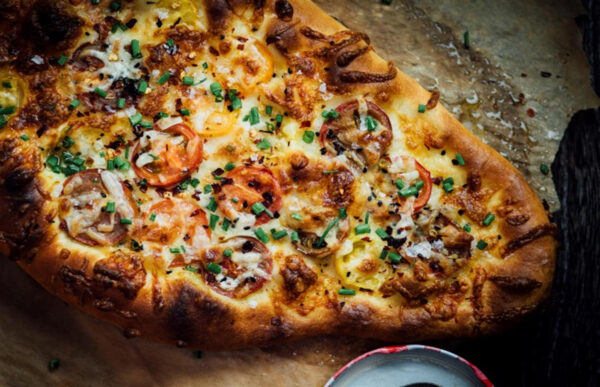
Homemade Indian naan makes a great pizza base. The dough traditionally uses ghee (clarified butter) but substitute with olive oil if you prefer. Our recipe also includes milk and yogurt for a soft bread, filled with pockets of air. Topped with a little chili, mozzarella, and tomatoes, this Italian-Indian hybrid is definitely worth a try.
Try a new topping: mushroom and truffle
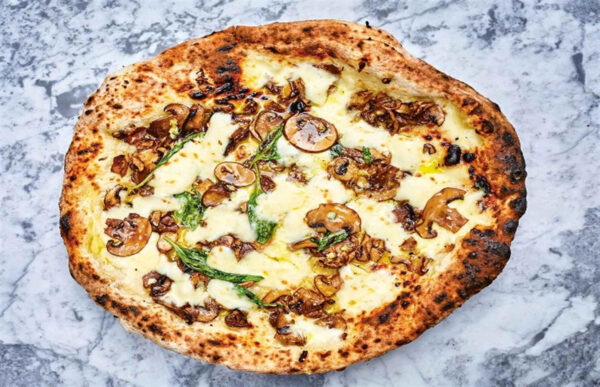
Sliced chestnut mushrooms are cooked with lots of garlic to release their juices, which are thickened with flour to make a rich liquor. Add in some mozzarella, Parmesan, and fresh basil for a wonderful hit of tasty, savory flavors. Truffle oil is drizzled on the pizza once cooked – it’s very strong, so use it sparingly.
Try a new topping: double pepperoni and spicy honey
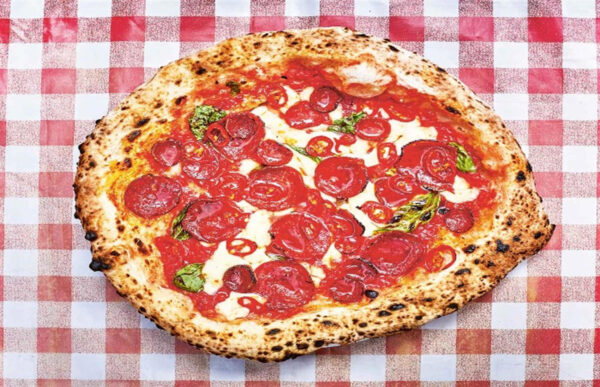
Honey infused with fresh chilies may become an addiction! It needs at least 12 hours to infuse, but will keep for up to three weeks to drizzle over roasted veg, use in salad dressings, whatever you like. But when combined with two different types of pepperoni, mozzarella, fresh chilies, and olive oil, it’s a seriously good pizza topping.
Four cheese pizza
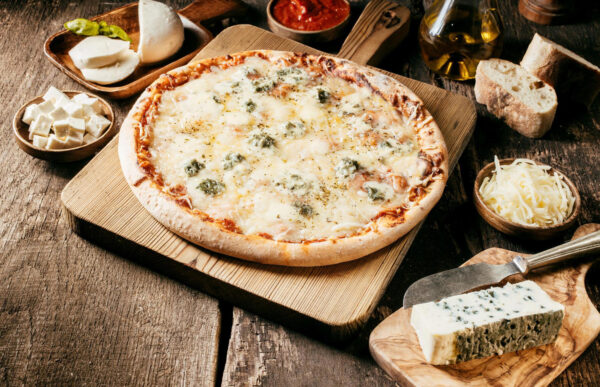
Quattro formaggi, four cheese pizza, is always a big hit. But which cheeses should you use? The Italians often combine mozzarella, Gorgonzola, Parmesan, and fontina, which is a very good melting cheese. You could substitute it with Emmental. The blue cheese must be soft and creamy, with a good strong flavor.
Sourdough pizza
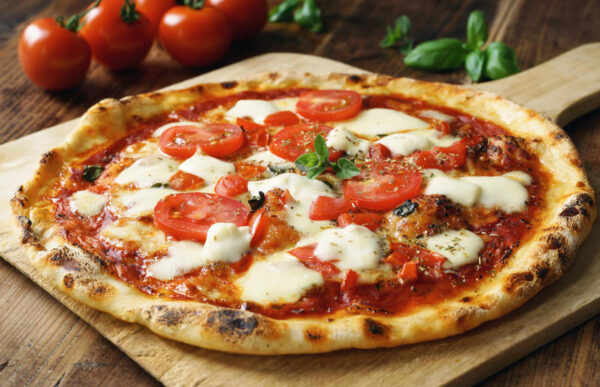
We’re not going to suggest you begin to perfect the art of sourdough bread-making just for a pizza, but if you’re a sourdough convert, the dough makes a very flavorsome base. Just add your favorite toppings and follow our-step-by-step guide to making sourdough.
